
Bank Charges South Africa: What You Pay & How to Reduce Fees
Understanding bank charges South Africa: From monthly fees to transaction costs. Decode South African bank charges. Learn about PAYT accounts, monthly fees, ATM costs, and proven strategies to reduce your banking fees in 2025.
SOUTH AFRICA GUIDE
12/4/20255 min read

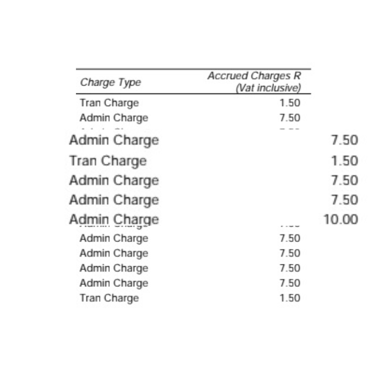
If you’ve ever found yourself asking:
• Why am I paying this much?
• Can I avoid some of these charges?
• Which fees are legit and which ones are just… creative?
You’re not alone. South Africans everywhere are trying to decode the mystery — and this article is here to help you crack the case.
Let’s unpack the mystery together, step by step.
Bank charges are a bit like paying rent, except the landlord (your bank) doesn’t always tell you upfront what the final amount is going to be. And just like renting property, you can move if the rent is too high — or stay if the benefits of that “neighbourhood” are worth it. Some fees make sense. Others… we tolerate because the alternative is going back to stuffing money under a mattress.
🧩 Why Do Bank Charges Even Exist?
Bank charges are essentially the bank saying:
“Look, we’re storing your money, moving your money, protecting your money, giving you a card, letting you swipe at Shoprite at 9PM, and sending you OTPs at the speed of lightning — someone has to pay for this.”
Just like a landlord charges for using their property, banks charge for using their financial infrastructure:
• Card machines
• ATM networks
• Fraud systems
• Banking apps
• Staff
• Buildings
• Security
• Technology
• And of course, the most important one: bank cards. They couldn’t simply link your money to the card and the account number you already have for life (your ID document and ID number).
But here’s where it gets interesting:
Not all bank charges make sense — and not all of them deserve space in your life.
Before you accuse your bank of robbery without a weapon, it helps to understand which fees are unavoidable… and which ones are waiting to be avoided with better habits and better account choices.
🧾 Common Types of Bank Charges in South Africa
1. New Card Cost — Buying the Key to the Kingdom
This is the once-off fee for the physical card.
Small card. Big power.
It lets you move through the world without carrying cash like it's 1987.
2. Monthly Account Fees — The Membership Fee
This is your subscription to “modern-day banking.”
If your account is not a PAYT (Pay-As-You-Transact) or zero-monthly-fee digital account, you’re paying this.
Some digital accounts like TymeBank and Bank Zero skip this entirely.
3. Transaction Fees — The Silent Snipers
These are the ones that appear quietly, usually right after payday.
They include:
• Cash withdrawals
• Cash deposits
• EFTs
• Debit orders
• Prepaid purchases
• Some card swipes
Most of these fees can be controlled or reduced.
4. Penalty Fees — The “Oops” Charges
These show up when you forget, slip up, or your debit order decides to embarrass you publicly.
Examples:
• Insufficient funds
• Rejected debit orders
• Overdraft misuse
• Late payments
The good news? These are 100% avoidable with planning.
5. ATM Fees — Cross-Border Shock
Using another bank’s ATM is like crossing a border: you pay customs.
Avoid this by using your own bank’s ATM or cashback at retailers.
6. International Transaction Fees
Netflix, Temu, AliExpress, Amazon, Forex Brokers…
They come with conversion fees and cross-border charges.
Unavoidable — but some banks offer cheaper forex rates.
💸 Accounts That Charge Per Transaction (PAYT Accounts)
Here’s where the mystery gets fun.
PAYT accounts don’t charge a monthly fee — they only charge you when you do something. So the real question to ask yourself is: How many times will I need to do this “something” in a month? If you do it often — for example, if you withdraw cash from an ATM every day and you’re charged each time — then a PAYT account might end up costing you more. In that case, it may be better to compare it with accounts that charge a once-off monthly fee and allow free ATM withdrawals (within certain limits). It’s still better than paying R10 per withdrawal if you’re someone who makes ten withdrawals a month.
Examples:
• FNB Easy PAYT
• Standard Bank MyMo PAYT
• Absa Transact PAYT
• Nedbank Pay-As-You-Use
• TymeBank
• Bank Zero
PAYT is perfect for people who:
• Don’t transact often
• Prefer digital over cash
• Want simplicity
• Hate monthly fees
PAYT is not ideal if you transact frequently — those R1–R4 charges pile up like dirty dishes during exam season.
💰 Accounts That Charge Monthly Interest (Cheque/Current Accounts)
Another layer in the mystery:
Some accounts charge interest monthly, and most people don’t even realise it.
This applies to:
• Cheque accounts
• Current accounts
• Accounts with overdraft limits
Here’s how it works:
1. Overdraft Interest
You may be charged:
• A facility fee just for having an overdraft
• Interest when you actually use it
2. Positive Balance Interest (Very Rare)
Some accounts pay you tiny interest if you keep money in the account — usually less than 1%.
3. Why Cheque Accounts Cost More
They offer:
• Credit access
• Bundled services
• Premium features
If you’re not using the benefits, you may be wasting money.
💡 Pro Tips (Bucks Insights Style)
Tell your bank to align your fee date with your payday.
Why?
Because many people open accounts during Mampara Week — that week when life is chaotic, money is low, and you would honestly consider selling one of your spare body parts if someone offered enough.
The bank sets your billing date during your chaos, and next month boom — debit order bounces, fees add up, and you’re in a loop of pain.
You can fix it with a simple request.
Do the same thing with your overdraft interest — align it with your bank-charges date, which is now your payday. So it becomes a “pay-pay”: a payday for you and a payday for the bank. A win-win situation… or is there actually an ultimate winner?
📲 The Rise of Digital Bank Accounts
We’ve moved from walking around with wallets stuffed with cash…
To cards…
To phones.
Digital banks to:
• Reduce costs
• Eliminate card fees
• Remove branch queues
• Offer cheap or free transactions
• Simplify banking
Your phone is now your bank.
Your card is the backup dancer.
To understand how different bank accounts stack up — from entry-level to premium options — read our comparison of South Africa’s leading banks here.
🏦 It’s Still a Business
Banks need:
• Buildings
• Systems
• Staff
• Tech
• Security
• Investment partners
• Networks
Your money doesn’t sit still — banks use it to make money.
They pay you interest (small).
They earn interest (big).
The fees keep everything running.
Understanding this helps you know what is fair — and what isn’t.
✔️ Bank Charges You Can Avoid Completely
You can avoid:
• Rejected debit order fees
• Overdraft misuse fees
• Cash-handling fees
• Cross-bank ATM withdrawals
• Many payment fees (depending on account type)
• ATM balance enquiries (use the app!)
Planning makes these disappear.
❌ Bank Charges That Are Mostly Unavoidable
These will always exist:
• Monthly account fees (unless you’re using zero-fee accounts)
• Card replacement fees
• International fees
• Cash deposit fees
But you can minimise them.
🧠 How to Reduce Your Bank Charges Like a Pro
1. Choose the Right Account Structure
PAYT = light users
Bundled = heavy users
2. Go Digital
App payments and EFTs cost less.
3. Avoid Cash
Cash is expensive. Digital is cheaper.
4. Withdraw Once, Not Five Times
Multiple withdrawals = multiple fees.
5. Monitor Your Statements
When you understand the mystery, it stops controlling you.
🎯 Conclusion: Bank Charges Don’t Have to Win
Bank charges feel like a puzzle — but once you understand how the system works, you’re no longer the one being played.
With smarter habits and the right account choice, you can reduce your bank charges by 30–70%.
Your money should work for you, not silently disappear into bank fees you didn’t understand.
Bucks Insights
Your guide to practical finance and investing.
Tips
Investing
info@bucksinsights.com
083-577-6145
© 2025. All rights reserved.